The Ingredient That Differentiates Your Brand Can Also Become Its Biggest Constraint
Many food and beverage brands try to differentiate by building around a unique or hard-to-source ingredient. A novel ingredient can give the product a stronger story & positioning, better taste, or a more premium claim. The wrong early supply chain decision may not hurt much at $1 million in revenue. But at $10 million, $25 million, or $50 million, it can quietly become one of the biggest constraints in the business, and further deteriorate enterprise value.
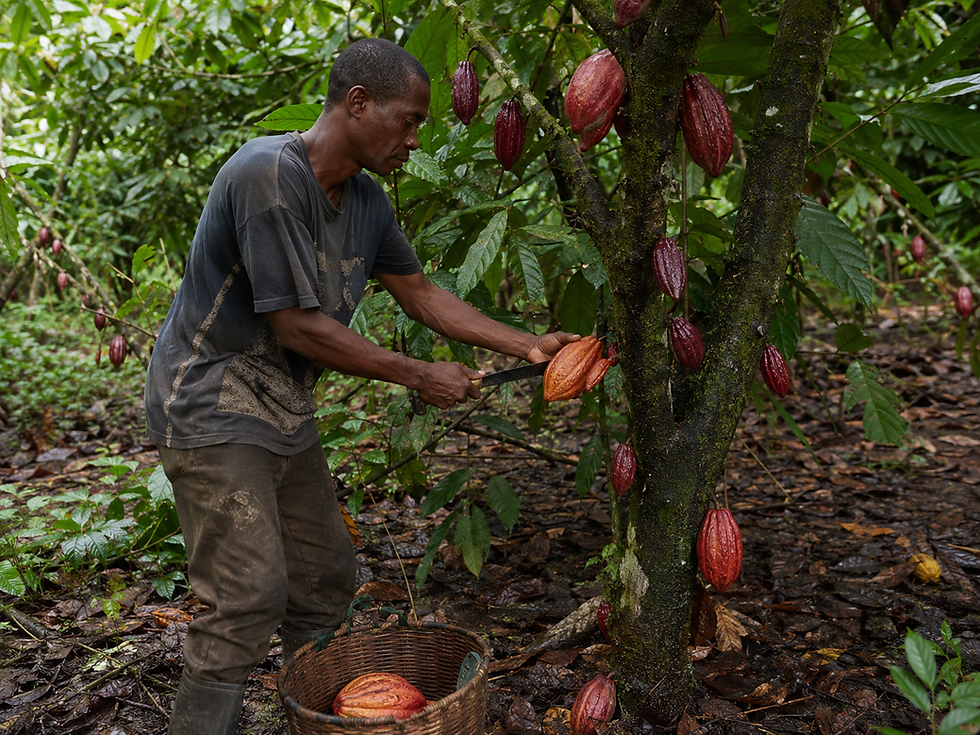
For example, a brand may build its formulation around organic, grass-fed A2 protein because it gives the product a clean and elevated health positioning. Another brand may source high-quality, fair trade, organic cocoa from a small foreign supplier because it creates a better-tasting drinking chocolate and supports the story they want to tell. Those decisions can be smart early on. They can help create separation in a crowded market. But they can also create real problems once demand starts to grow.
As volume increases and competitors enter the market, brands often run into issues that were easy to ignore at smaller scale. Suppliers may not be ready to support higher volumes. Crop variability can affect consistency and cost. Lead times stretch, tariffs and freight become more material, and volume commitments, or lack of, start to carry real consequences. Backup suppliers may not exist, or the available alternatives may change the product profile too much. What originally looked like a point of differentiation can quickly become a source of margin compression, availability issues, and operational drag.
That is when management is forced into decisions that should have been addressed much earlier. Do we reformulate and risk changing a product customers have adopted and love? Do we take larger inventory positions than we are comfortable with? Do we accept lower margins and hope growth solves the problem? Do we raise price and risk hurting velocity? Or worse, do we change the product direction that is already working because the original supply chain cannot support the business we are trying to build?
A good formula is not just one that tastes good or looks good on a label. It has to be commercially viable. It has to be repeatable. It has to work with real production constraints. It needs supplier optionality. It needs enough flexibility to adapt when costs, availability, or market conditions change. It needs redundancy with inputs.
The brands that get this right are not necessarily the ones with the most interesting ingredients. They are the ones that understand the trade-offs early and build the product with scale in mind. That does not mean avoiding premium, unique, or differentiated ingredients. Those can be incredibly valuable. But they need to be pressure-tested before the product becomes too dependent on them.
Can the ingredient input scale with demand? Are there qualified backup suppliers? How much pricing power does the supplier have? What happens if input costs move 10–20%? Can the co-man run the formula efficiently? Is the ingredient tied to a claim that cannot easily be replaced? Does the margin still work once the business is operating at a much larger volume? These questions are not always exciting, but they are often the difference between clean growth and painful growth.
Not every supply risk can be eliminated, especially for smaller brands without volume leverage. But it can be identified, priced into the model, and managed without heartache before the brand becomes too dependent on a single fragile input.
At Nubev Strategic, we help food and beverage operators think through these issues before they become expensive. Our work is not just about finding ingredients or solving supply problems after the fact. It is about helping brands make better product, supply chain, and commercialization decisions earlier, so growth does not expose weaknesses that could have been avoided.
Keep an eye out... We will explore additional hidden constraints soon.


Comments